Park Hill Neighborhood
One of Denver's most beloved and storied neighborhoods. historic Tudor homes, mature tree canopy, front-porch culture, City Park at your doorstep, and a genuine community identity that has endured for over a century.
Neighborhood Spotlight
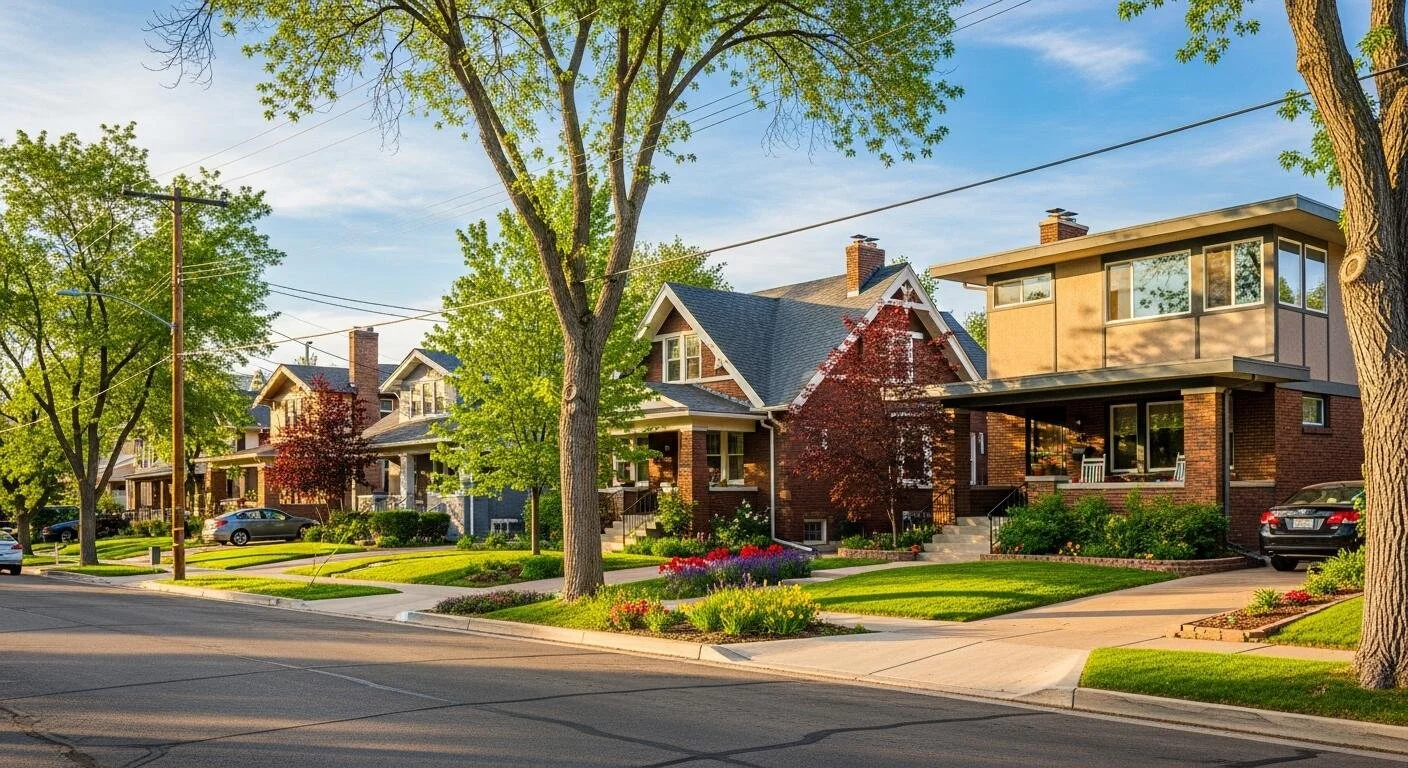
Park Hill sits on Denver's central-east side, roughly bounded by Colorado Boulevard to the west, Quebec Street to the east, East Colfax Avenue to the south, and East 52nd Avenue to the north. It is one of the city's largest and most storied residential neighborhoods, with roots stretching back to 1887 when Baron Alois von Winckler platted the original 32-block development just east of City Park. The name has stuck for well over a century, and the neighborhood's bones — broad streets, deep setbacks, mature trees, and architecturally rich homes — reflect those original development standards.
Park Hill is formally divided into three sub-neighborhoods: South Park Hill, North Park Hill, and Northeast Park Hill. Each has its own character, price point, and housing mix, but all share the same DNA: walkable streets, a front-porch culture, and a community identity strong enough to anchor residents for decades. The Park Hill Neighborhood Association (not an HOA) is one of Denver's most active, hosting regular events, block parties, and an annual Fourth of July parade that draws thousands — the largest Independence Day march in the city.
Park Hill's civil rights history is woven into its identity. In the 1960s, as Denver's neighborhoods navigated integration, Park Hill became a center of community organizing around open housing and school desegregation. Resident Rachel Noel championed school integration that ultimately shaped Denver's public school system citywide. That history of engagement and advocacy still shapes how residents show up for their neighborhood today — and it is part of what makes Park Hill feel different from simply a collection of nice houses on tree-lined streets.
The Neighborhood and Location
Park Hill's position in central-east Denver gives it a genuine locational advantage. Downtown is about 10–15 minutes by car. Cherry Creek is 15 minutes south. RiNo and the arts district are 10 minutes northwest. Denver International Airport — often cited as a pain point for east-side neighborhoods — is actually one of Park Hill's quiet advantages: about 25 minutes without traffic, meaningfully closer than many west-side neighborhoods.
City Park forms Park Hill's western boundary and is arguably the neighborhood's most defining amenity. The 330-acre park hosts the Denver Zoo and the Denver Museum of Nature and Science, jogging and cycling paths, a golf course, two lakes, tennis courts, and Ferril Lake — the site of City Park Jazz, a free outdoor concert series running every Sunday evening in summer that draws thousands of residents from across Denver. For Park Hill residents, this is not a destination — it is the backyard.
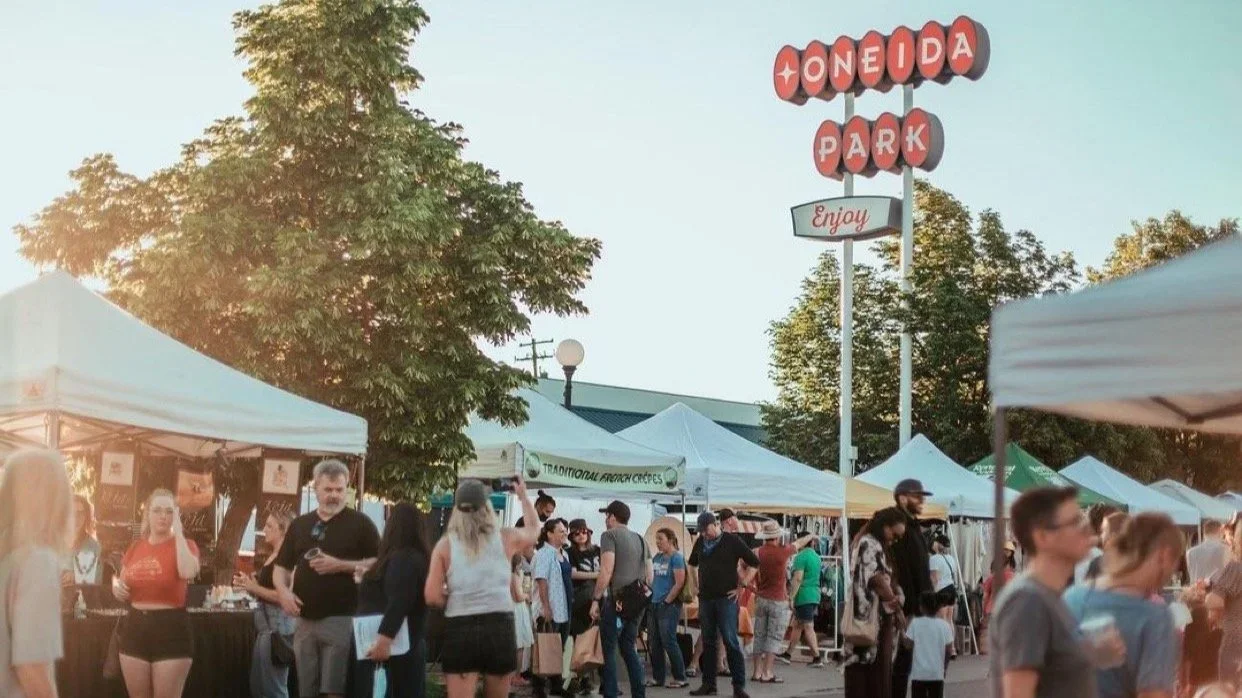
Within the neighborhood, key commercial nodes cluster at a few intersections: 23rd and Dexter, Kearney Street near 23rd, and the Oneida Park corridor near 29th and Oneida. These are the spots Sam walks in the video — low-rise, locally owned, and thoroughly neighborhood in character. There is no single dominant commercial strip the way Highland has 32nd Avenue or Cherry Creek has the North district, which is part of what keeps Park Hill feeling residential and unhurried.
Transit options include the 15 and 15L bus lines along East Colfax — one of Denver's most frequent routes — and easy I-70 access for airport and mountain runs. The neighborhood is also one of Denver's most bikeable, with Colorado Boulevard buffered lanes and neighborhood streets that connect naturally into the wider city grid. to the broader Denver trail network. It is a gentle, low-traffic path that serves as both a recreational corridor and a genuine everyday route for dog walkers, commuters, and families.
Walkability, Lifestyle, and Amenities
Park Hill is one of the more walkable neighborhoods on Denver's east side. The combination of City Park to the west, neighborhood commercial corridors in the interior, and Colfax's dense retail strip to the south means most daily needs are accessible on foot or by bike. For families, the density of playgrounds, school proximity, and front-porch culture makes it one of the city's most child-friendly urban neighborhoods.
The Oneida Park area — centered around 29th and Oneida — is the neighborhood's most polished commercial cluster. Esters Neighborhood Pub anchors the corner with craft beer and a lively patio. Nearby you'll find Lucina Eatery and Bar, a James Beard–recognized Latin American and Spanish restaurant that has become one of Park Hill's dining destinations. Tables restaurant, a long-running neighborhood favorite, serves approachable American fare in a warm, community-oriented setting.
The 23rd and Dexter corridor offers a more casual mix: Honey Hill Café for morning coffee and brunch, Cake Crumbs Bakery for coffee and pastries, and a rotation of independent shops and services that cater to residents rather than tourists. Spinelli's Market on Kearney Street is a genuine neighborhood institution — a full-service Italian market and deli that has been a Park Hill anchor for decades, stocked with house-made pasta, fresh sandwiches, and imported goods that make it a daily errand stop for longtime residents.
Park Hill Commons, visible in Sam's video, is the neighborhood's community retail center — anchored by a grocery and home to a mix of locally oriented services. It is functional rather than glamorous, but that is the point: Park Hill is built around residents' daily lives, not retail theater.
Annual events give the neighborhood its rhythmic social calendar. The Park Hill Fourth of July Parade is Denver's largest Independence Day march, running through the heart of the neighborhood with floats, marching bands, and an enormous community turnout. The Park Hill Arts Festival brings up to 90 artists to the grounds of the Park Hill Masonic Lodge on Montview Boulevard each summer. And City Park Jazz — technically City Park, practically Park Hill's living room — runs every Sunday evening from June through August.
Park Hill Real Estate: Prices, Trends, and Types of Homes
Park Hill is not a single market — it is three meaningfully different ones stacked together, and understanding which sub-neighborhood you are buying in matters as much as the neighborhood name itself. Sam covers this distinction directly in the video: South Park Hill is where the biggest houses are, North Park Hill offers more variety, and Northeast Park Hill is the most affordable entry point into the broader area. Here is how the numbers break down:
South Park Hill Median Home Value: ~$949,000–$1,075,000 (larger lots, more updated homes, City Park proximity; median list price ~$1,046,000 as of March 2026)
North Park Hill Median: ~$673,000–$760,000 (classic bungalows, Denver Squares, more renovation opportunity; average single-family ~$793,000)
Northeast Park Hill Median: ~$505,000–$535,000 (most affordable entry into greater Park Hill; up ~22% year-over-year)
Average Days on Market: 26 days (South), 38–49 days (North/Northeast)
List-to-Sale Ratio: ~97–98% for well-priced homes; South Park Hill hot homes sell above list within 5 days
ZIP Code: 80207
The dominant housing type across all three sub-neighborhoods is the brick Tudor and Denver Square from the 1920s–1950s, ranging from 750-square-foot alley cottages to sprawling 6,000-square-foot mansions along Montview Boulevard and other premier blocks. The Historic District — approximately 32 blocks in South Park Hill — is particularly dense with architecturally significant homes. Mid-century ranches are more common in North and Northeast Park Hill, along with a growing number of modern infill projects.
For buyers in the $700K–$900K range, North Park Hill offers the best combination of neighborhood access, architectural character, and relative value. South Park Hill commands a premium for good reason — City Park proximity, larger lots, and the concentration of Park Hill's most impressive historic architecture — and the market reflects it, with hot homes going under contract in under a week. Northeast Park Hill has seen the strongest year-over-year price growth in the area, a signal that its relative affordability is attracting serious buyer demand.
Benefits of Living in Park Hill
City Park — Essentially Your Backyard
330 acres of Denver's finest urban park, with the Denver Zoo, Denver Museum of Nature and Science, two lakes, jogging paths, tennis courts, a golf course, and City Park Jazz every Sunday in summer — all within walking distance of most Park Hill addresses. Very few neighborhoods in any American city can claim this kind of institutional parkland as a neighbor. It is the single biggest reason South Park Hill commands a premium, and it benefits the entire neighborhood.
Architectural Character and Historic Depth
Park Hill's Historic District is one of the most architecturally cohesive in Denver — 32 blocks of brick Tudors, Denver Squares, bungalows, and early 20th-century homes built to standards that required deep setbacks, generous tree lawns, and minimum construction quality. The result is a streetscape that feels genuinely historic rather than artificially preserved. For buyers who want a home with real bones and real character, Park Hill is one of a handful of neighborhoods in Denver that can deliver it.
Genuine Community and Civic Life
The Park Hill Neighborhood Association is one of Denver's most active. The annual Fourth of July Parade — Denver's largest — is not a civic formality; it is genuinely attended and genuinely beloved. Block parties, neighborhood planning meetings, and organized advocacy around everything from development to school quality reflect a community that has been cultivating its identity for decades. This is the kind of neighborhood where people stay for 20 years and know their neighbors by name.
Location, Access, and Sub-Neighborhood Flexibility
10–15 minutes to downtown, 25 minutes to DIA, 15 minutes to Cherry Creek. Easy I-70 and Colfax access. Three distinct sub-neighborhoods at meaningfully different price points give buyers genuine flexibility — you can get into the Park Hill identity at $505K in Northeast or spend $2M+ on a premier block in South Park Hill. Not many neighborhoods offer that range without losing cohesion.
Drawbacks and Considerations
Price Variation Can Be Confusing
The gap between South Park Hill (median ~$949K–$1.075M) and Northeast Park Hill (median ~$505K–$535K) is large enough that "Park Hill" as a neighborhood designation does not tell you much without knowing which part. Buyers need to understand the sub-market they are actually buying in — and lenders, appraisers, and agents sometimes use the boundaries differently. Block-by-block comps matter more here than neighborhood-level statistics.
Older Homes Mean Older Systems
Most Park Hill homes were built between 1920 and 1950. The architectural charm is real, but so are the costs of older electrical panels, knob-and-tube wiring in unrenovated homes, aging plumbing, and foundation considerations common in Denver's clay soils. Buyers should budget for inspection costs and plan for potential updates — this is not a neighborhood where you can assume a house that looks good has been fully modernized underneath.
Park Hill Park Is Open — But Still Taking Shape
After years of contentious debate between private developers and open-space advocates, the former Park Hill Golf Course — idle since 2018 — officially opened as Park Hill Park in October 2025. At 155 acres, it is now the fourth-largest park in the Denver Parks and Recreation system. The land swap that made it possible gave the former owners a city-owned parcel near DIA in exchange, finally resolving one of Denver's most divisive neighborhood planning fights.
Right now the park is open daily during daylight hours for passive recreation — strolling and jogging on informal pathways through what still resembles overgrown golf course greens. It is a work in progress: the formal design phase begins in 2026, with future amenities including ballfields, natural playgrounds, and exercise trails all planned. For buyers near 35th and Colorado Boulevard, this is a significant long-term upside — 155 acres of new parkland essentially next door, with the city committed to improving it over the next several years.
Things to Do in Park Hill
Walk or Bike City Park: The Denver Zoo, the Denver Museum of Nature and Science, Ferril Lake, tennis courts, jogging paths — and on Sunday evenings in summer, City Park Jazz, one of Denver's best free events. City Park is the kind of amenity that sounds nice in a listing description but is genuinely life-changing as a neighbor. Take a morning lap around the lake and you will understand immediately why South Park Hill commands a premium.
Eat at Lucina Eatery and Bar: 2245 Kearney Street. A James Beard–recognized Latin American and coastal Spanish restaurant in the heart of Park Hill. Exceptional cocktails, a refined but unpretentious atmosphere, and one of the best happy hours in the neighborhood. It is the kind of restaurant that makes a neighborhood feel like a real place.
Shop at Spinelli's Market: A Park Hill institution on Kearney Street — full-service Italian market and deli with house-made pasta, fresh sandwiches, imported goods, and a genuinely warm neighborhood feel. Longtime residents stop in daily. It is the kind of local business that anchors a neighborhood's identity in a way no chain ever could.
Attend the Fourth of July Parade: Denver's largest Independence Day march runs through the heart of Park Hill every July Fourth. Floats, marching bands, costumed performers, and enormous community participation make it a neighborhood centerpiece. If you want to understand what Park Hill's community identity actually feels like, this is the event to experience it.